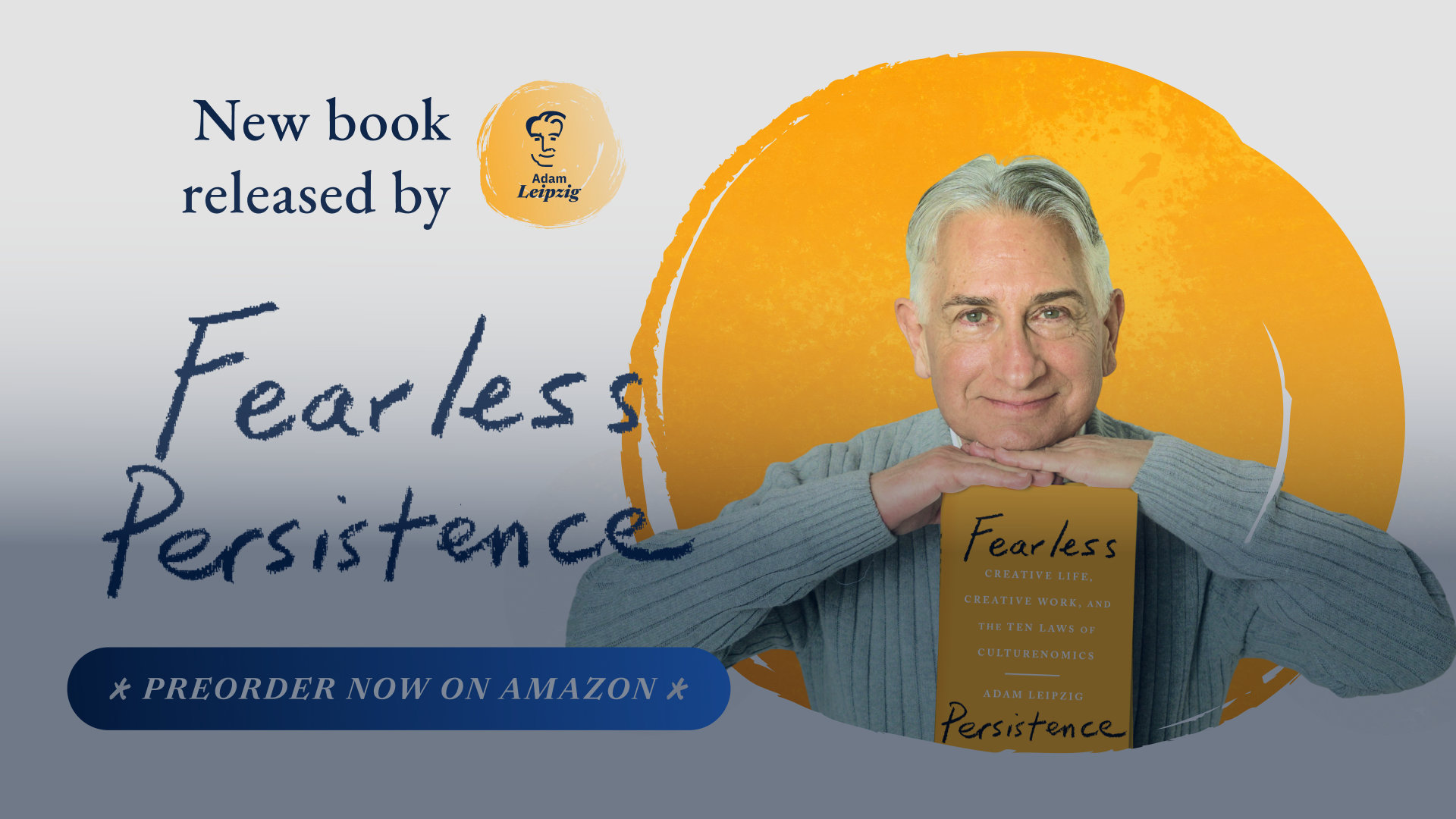
The Origin of “Fearless Persistence”
You're Closer Than You Think!
Get exclusive insights and your free chapter of Fearless Persistence - a look inside Adam’s approach to creativity, purpose, and leadership.
Every title tells a story, even before a single page is written. It suggests what kind of conversation the reader is about to enter. When I began working on this project, I had no title, just a question that had followed me for decades: How do people keep going? I had seen so many gifted creators, artists, founders, teachers, leaders, step into their work with extraordinary vision, only to step away when the world pushed back. Some left because the industry changed; others because the cost felt too high. A few stayed. Those few always fascinated me. What made them different?
I started with words that circled the idea of endurance. Staying Power. The Long Arc. The Practice of Persistence. They were accurate, but they lacked vitality. They described something mechanical, almost grim, as though persistence were a kind of plodding through. The people I admired weren’t grim. They were luminous. Even when they faced setbacks, there was a lightness in their motion, a sense that their work was an extension of who they were. Persistence, for them, was grace, not grind.
Still, I kept testing language. I tried Courageous Continuance and The Art of Staying In. I liked the sound of Fearless Creation for a while, but it felt too one-sided, too easy to confuse with bravado. In truth, none of us are without fear. Every meaningful project brings risk, exposure, and doubt. The question isn’t whether fear exists; it’s whether we stay connected to purpose in its presence. That insight became the turning point. I realized I wasn’t writing about courage as the absence of fear, but about the capacity to continue despite it.
“Fearless” and “Persistence” finally came together during a conversation with one of my former students. We were talking about launching a new venture that, on paper, seemed almost impossible: too ambitious, too unconventional. I told her she needed persistence. She laughed and said, “I’m persistent, but I’m terrified.” I replied, “Then be fearless about your persistence.” The phrase landed with both of us at the same moment. I heard it and thought, That’s it. The two words balance each other. Fearless speaks to spirit; persistence speaks to practice. Together they describe what sustains creative lives over time.
When you examine the phrase closely, it’s not about aggression or perfection. “Fearless” doesn’t mean unafraid. It means you don’t let fear make your decisions. “Persistence” doesn’t mean endless motion. It means returning, steadily, to what matters most. Fearless persistence is a posture of steady, clear, resilient engagement. It is the act of staying connected to purpose even when outcomes are uncertain.
As the title began to settle, I tested it in conversation. The response was immediate. Artists nodded. Entrepreneurs nodded. Teachers nodded. The words seemed to belong to everyone who had ever chosen to keep going when stopping would have been easier. They understood instinctively that fearlessness is not about denial but about relationship: your relationship with the unknown, with failure, with yourself. And persistence is the quiet rhythm that carries you through it.
I also liked the way the title worked rhythmically. Two words, both strong, both universal. “Fearless Persistence” doesn’t promise transformation through luck or passion; it suggests transformation through steadiness. It sounds like something you can practice, not something you’re born with. That was important to me. I’ve always believed that creativity and leadership are learned behaviors. Talent matters, but structure and mindset sustain. The title had to reflect that: a human capacity anyone can cultivate.
Over time, the phrase began to teach me back. I found myself noticing moments of persistence in ordinary life: teachers who continued to show up for their students, community organizers who stayed at the table after the funding disappeared, families who rebuilt after losses. They weren’t fearless in the superhero sense. They were fearless in the human sense: they allowed fear to coexist with purpose. That balance creates sustainability. It’s what lets us do the long work without losing ourselves.
When people ask how I came to the title, I sometimes tell them it found me, not the other way around. Like most good creative choices, it emerged after many failed drafts, when I stopped trying to be clever and started listening to what the work was actually about. In every field I’ve worked in, film, business, education, the same pattern repeats: the people who succeed over time are those who return to their purpose, again and again, without letting fear or fatigue close the door.
The title reminds me daily that persistence is an art form and that fearlessness is its quiet companion. Together they form a discipline, one that holds us steady in uncertainty and keeps us connected to what matters most. Fearless Persistence is less a destination than a way of traveling. The willingness to stay, to continue, and to create meaning even when the path ahead is only partly visible.